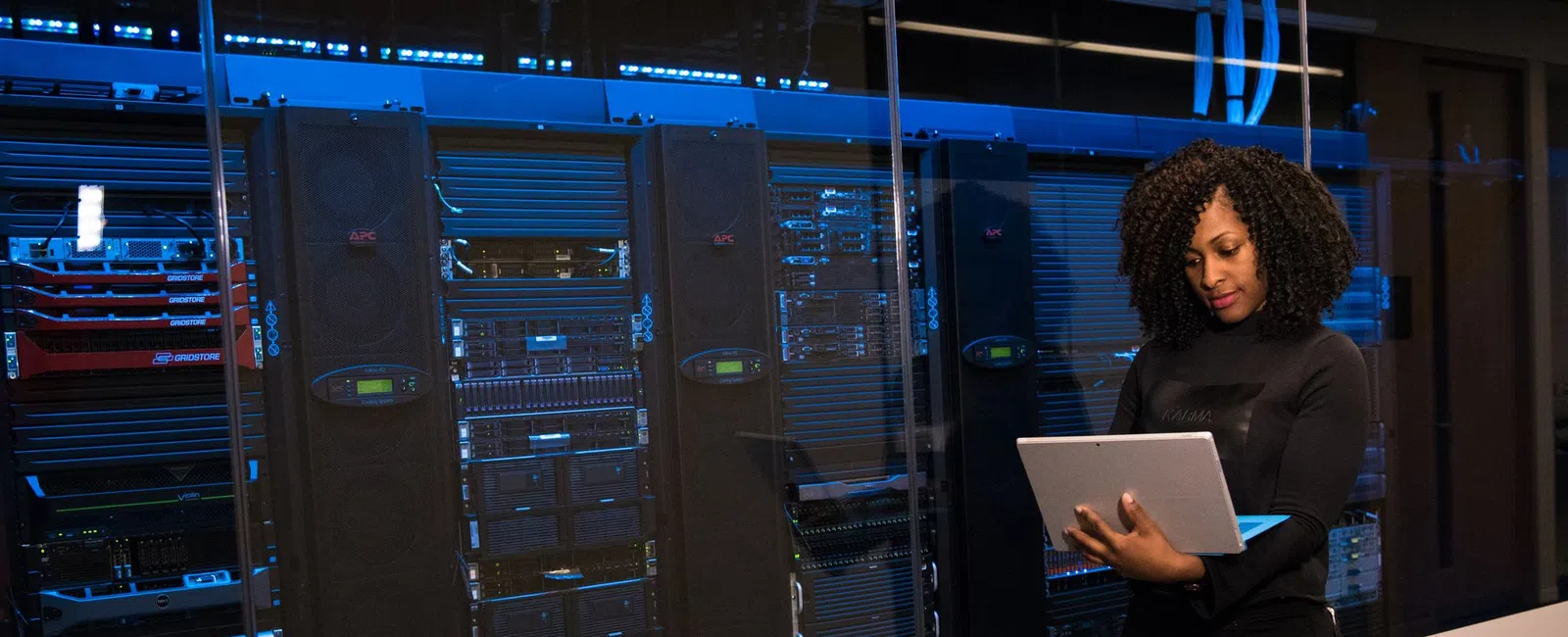
A ransomware attack hit a Greensboro manufacturer on a Thursday afternoon; their cloud backup was intact, but the 200 GB restore crawled over their business-class internet connection and took 11 hours, with most of Friday lost. A local NAS sitting two feet from the server would have had them back in 45 minutes. This decision has a real cost measured in downtime and lost revenue.
The Core Trade-Off: Speed vs. Distance
Local backup wins on recovery speed because restoring over a LAN is orders of magnitude faster than pulling data across a WAN internet connection. Cloud backup wins on off-site protection because the data physically exists somewhere other than your building. Neither advantage cancels the other out.
| Factor | Local Backup | Cloud Backup |
|---|---|---|
| Recovery Speed | Fast — LAN speeds, minutes to hours | Slow — WAN speeds, hours to days for large datasets |
| Off-site Protection | None — same physical location | Strong — geographically separate by design |
| Cost Structure | Higher upfront hardware; lower ongoing cost | Low upfront; recurring subscription scales with storage |
| Ransomware Risk | Vulnerable if network-connected and unprotected | Vulnerable if not immutable; often better default protection |
| Maintenance Burden | Hardware lifecycle, monitoring required | Provider-managed infrastructure; testing still required |
Why Triad SMBs Can't Treat This as a Generic Decision
The Piedmont Triad introduces three variables generic guides ignore: bandwidth variability across the region, storm and power-outage exposure, and compliance mandates tied to the area's dominant business verticals. Each one shifts the right answer for your business.
Broadband Variability Across the Triad
Fiber is strong in Greensboro and Winston-Salem urban cores. Business parks in Kernersville and rural Forsyth and Guilford corridors often run on 100-300 Mbps cable. At 200 Mbps, restoring 200 GB takes roughly three hours under ideal conditions; real-world throughput is rarely ideal. For datasets above a few hundred gigabytes, cloud-only backup means a painful recovery window that local backup eliminates.
Storm and Power-Outage Exposure
The Piedmont sees ice storms every few winters and tropical system remnants each fall. A severe weather event can knock a facility offline for 24-72 hours and physically damage on-site hardware. That exposure makes off-site copies non-negotiable; a local-only strategy in the Triad is a single-event failure waiting to happen.
Compliance Verticals: Healthcare and Financial Firms
Triad medical practices including the dense concentration of dental and specialty clinics in Guilford and Forsyth counties operate under HIPAA, which mandates specific backup retention periods, encryption standards, and documented recovery testing. SEC-adjacent financial firms and CPA practices face overlapping obligations around data integrity and auditability. A backup architecture not designed with compliance as a requirement is a liability, not just a technical shortcoming.
The 3-2-1 Rule: The Architecture Both Options Are Supposed to Deliver
The 3-2-1 backup rule requires three copies of your data, on two different media types, with one copy kept off-site. It is the industry benchmark for backup resilience. Cloud-only and local-only setups each fail 3-2-1 on their own. A managed hybrid is what actually satisfies the rule.
Where Single-Method Setups Fall Short
- Local-only backup: Two copies on the same media at the same location. Fails the off-site requirement. A fire, flood, or ice storm that damages the server damages the backup too.
- Cloud-only backup: Satisfies off-site but often means only one backup copy exists. Fails the two-media requirement. Recovery over constrained WAN links creates operational risk for large datasets.
- Managed hybrid backup: Local NAS provides fast on-site recovery; cloud replication satisfies the off-site copy. Three copies, two media types, one off-site: 3-2-1 achieved.
The Ransomware Wrinkle
Ransomware increasingly targets backup systems specifically; attackers know an intact backup eliminates their leverage. A network-connected NAS without air-gap protection is vulnerable; a cloud backup without immutability enabled can be overwritten through a compromised admin account.
Strong ransomware protection requires two features working together: immutable cloud backups (write-once copies the attacker cannot modify) and air-gapped local snapshots (copies isolated from the live network). A managed hybrid, configured correctly, delivers both.
When Local Wins, When Cloud Wins, and When You Need Both
The right backup architecture depends on dataset size, recovery speed requirements, and compliance obligations. Three concrete Triad scenarios with direct answers.
Scenario 1: Local-First Makes Sense
A Kernersville manufacturer running CAD files and an ERP system with 500 GB or more of operational data needs the production floor back fast. Pulling 500 GB from the cloud over business cable could consume most of a workday. A local NAS with scheduled snapshots handles recovery in under an hour. Cloud replication still belongs in the stack for off-site protection, but local is primary.
Scenario 2: Cloud-First Makes Sense
A five-person CPA firm whose entire dataset lives in Microsoft 365 and QuickBooks Online has minimal on-premise data. The firm's backup obligation is ensuring Microsoft 365 data is independently backed up; Microsoft's retention policies are not a substitute for a true backup. A cloud-first strategy with a solid Microsoft 365 backup layer is the right fit; local hardware adds cost without meaningful benefit.
Scenario 3: Hybrid Is the Right Answer
A Triad medical practice with patient records on a local server, remote staff, and HIPAA obligations cannot be served by either pure approach. Local backup delivers fast recovery; cloud replication satisfies off-site requirements and supports remote access continuity during a facility outage. HIPAA demands documented encryption, retention, and tested recovery, which means active management, not a set-and-forget configuration.
Merit Technology Solutions' Data Backup & Recovery services in the Triad are built to design, implement, and monitor whichever model fits your business. For practices and firms that need a tested plan, disaster recovery planning ensures the hybrid architecture works when you need it.
Frequently Asked Questions
Is cloud backup enough on its own, or do I still need a local backup?
For most Triad SMBs, cloud backup alone is not enough. It satisfies the off-site requirement but creates a slow recovery window for large datasets on constrained WAN connections. A local backup closes the recovery speed gap. Businesses with datasets above a few hundred gigabytes or strict uptime requirements almost always need both.
How long does it actually take to restore from a cloud backup?
A 200 GB restore on a 200 Mbps business connection takes roughly three or more hours under ideal conditions, but often longer in practice. A local NAS restore over a LAN can complete the same job in under an hour, sometimes minutes.
What is the 3-2-1 backup rule and should my business follow it?
The 3-2-1 backup rule requires three copies of your data, on two different media types, with one copy stored off-site. Most businesses should follow it as cloud-only and local-only setups each fail at least one requirement. A managed hybrid backup strategy is the most practical way to satisfy all three consistently.
Can ransomware delete or encrypt my cloud backups?
Yes. Without immutability enabled, a ransomware attacker with access to your cloud admin credentials can delete or overwrite backups. Immutable cloud backups, write-once copies that cannot be modified after creation, prevent this. Local backups require air-gap isolation from the live network for the same protection.
What backup method is required for HIPAA compliance?
HIPAA does not mandate cloud or local backup specifically. It requires that ePHI be backed up, encrypted, recoverable via documented procedures, and tested regularly. The architecture (cloud, local, or hybrid) must satisfy all four requirements and produce documentation sufficient for an audit.
How much does a managed backup solution cost for a small business?
Costs vary based on dataset size, number of systems protected, and whether the solution is cloud-only, local-only, or hybrid. A discovery call with Merit Technology Solutions will produce a specific quote for your environment in Winston-Salem, Greensboro, or Kernersville.
What happens to my data if my internet goes down and I only have cloud backup?
You cannot access or restore your backup until connectivity is restored. For Triad businesses during ice storm outages or in areas with less reliable WAN connections, this creates a complete recovery blackout. A local backup copy eliminates that dependency entirely.
How often should a small business test its backups?
At least quarterly, or monthly for businesses with active compliance requirements like HIPAA. A backup that has never been tested is not a reliable backup. Managed backup services from Merit Technology Solutions include scheduled restore validation so you know recovery will work before you need it.
Not Sure Which Backup Strategy Your Triad Business Actually Needs? Let's Find Out in 15 Minutes.
Click to schedule a no-obligation discovery call with Merit Technology Solutions's team. We'll review your current backup setup, identify the gaps, and tell you exactly what a managed solution would look like for your business in Winston-Salem, Greensboro, or Kernersville.
Schedule Your 15-Minute Discovery Call